Choosing the right farm-to-table blog header font combinations for summer recipes means balancing an organic aesthetic with mobile readability. You want typography that feels as fresh as an heirloom tomato salad but remains easy to read on a phone screen while your audience cooks.
Why Rustic Typography Works for Seasonal Content
A strong rustic font pairing usually mixes a textured display font for the main recipe title with a clean, legible serif for the subheadings. This approach works best when publishing seasonal content that relies heavily on bright, natural-light photography. The visual contrast keeps the design grounded without competing with your vibrant food images.
Adapting Fonts to Your Blog's Environment
Tailor your typography to your specific visual texture and layout shape. If your photography features heavy visual texture like wooden cutting boards and wrinkled linen napkins choose a smoother, modern serif for your headers to avoid visual clutter. For grid-heavy layouts, wider sans-serif fonts help align ingredients lists neatly and keep the page structured.
Consider your maintenance level and seasonal focus as well. Highly decorative script fonts require manual kerning adjustments every time you type a new recipe title, whereas standard serifs update automatically in your CMS. If you want to see specific examples of how these typefaces look in action, reviewing dedicated seasonal typography guides can help you visualize the final layout before committing.
Common Mistakes and Technical Fixes
A common mistake is using overly distressed fonts that turn into illegible smudges on small screens. Another issue is poor color contrast. Summer recipes often inspire light, airy color palettes, but pale sage green or soft wheat text on a white background fails accessibility standards. Stick to deep charcoal, olive green, or roasted tomato red for your header text to maintain readability.
To fix spacing issues in your site settings, restrict distressed fonts strictly to H1 tags and use a highly legible font for H2 and H3 tags. You can also adjust the letter-spacing in your CSS to give rustic fonts room to breathe, usually around 0.05em for uppercase subheadings. If you need help balancing the rest of your page, exploring artisanal body text pairings ensures your longer paragraphs remain comfortable to read.
For those running a more professional kitchen diary or sharing complex fermentation techniques, checking out a typography guide tailored for culinary professionals will help you maintain an authoritative yet approachable tone.
Quick Setup Checklist
- Pick one expressive display font for recipe titles (H1).
- Select a clean, web-safe serif or sans-serif for ingredient lists and instructions (H2/H3).
- Test your header on a mobile device to ensure the rustic textures do not blur.
- Verify color contrast using a free web accessibility tool to ensure text pops against light summer backgrounds.
- Add a slight letter-spacing to uppercase subheadings for better airflow.
 Farm-To-Table Fonts: a Sustainable Food Blog Guide
 Farm-To-Table Font Pairings for Seasonal Food Blogs
 Rustic Typography for Your Organic Food Blog
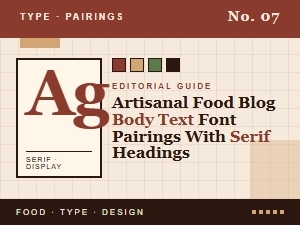 Serif Headings, Artisanal Body Text Fonts
 Best Serif and Sans Serif Font Pairings for Savory Food Blogs
 Rustic Font Pairings for Savory Recipe Sites