Chefs launching an eco-conscious website need typography that feels organic but remains highly readable on mobile screens. This sustainable food blog font pairing guide for chefs gives you the exact combinations to match your farm-fresh ethos without sacrificing user experience.
What Makes a Font "Farm-to-Table"?
Farm-to-table typography blends rustic warmth with modern legibility. Think grounded serif typefaces for headings paired with clean, unpretentious sans-serifs for recipe instructions. You need this approach when your content highlights local agriculture, foraging, or zero-waste cooking.
Organic typography relies on subtle visual textures. A slightly roughened serif or a geometric sans-serif with soft edges mimics the natural world. This visual cue tells readers they are about to experience something handmade and locally sourced.
Matching Fonts to Your Culinary Aesthetic
Just like plating a dish, your font choices must adapt to your specific visual ingredients. If your recipe photography is moody and shadow-heavy, high-contrast serifs like Playfair Display work beautifully to anchor the page.
For bright, sunlit images of fresh produce, you might prefer lighter header styles for bright summer dishes to keep the layout feeling airy. Consider your recipe card layout as well. Dense ingredient lists require a highly legible sans-serif with a tall x-height, like Lato or Inter.
Common Typography Mistakes in Food Blogs
The biggest error chefs make is using handwritten fonts for body text. Script fonts look great on a physical chalkboard menu but cause severe eye strain on a smartphone screen. Save the decorative scripts strictly for your logo or occasional pull quotes.
Another issue is tight line spacing, which makes step-by-step cooking instructions blur together. To fix this in your website theme, increase your body text line-height to at least 1.6. Ensure your paragraph text is dark gray rather than pure black to soften the contrast against cream or off-white backgrounds.
When adjusting your CSS or theme customizer, set your base font size to at least 18px for body copy. Recipe blogs are often read in busy kitchens where screens are propped up against jars. Larger, clearer text reduces friction for your readers. For more structural advice, reviewing the foundational pairing rules for eco-conscious kitchens will help you avoid these layout traps.
Your Pre-Launch Typography Checklist
Before publishing your next menu update, run through these quick checks. Remember that adjusting your typography as the harvest changes keeps your blog feeling alive and current.
- Verify that your heading font loads quickly and doesn't delay page rendering.
- Check your ingredient lists on a mobile device to ensure adequate spacing.
- Confirm that your body text color provides enough contrast against your background.
- Limit your entire site to a maximum of two or three typefaces.
 Farm-To-Table Font Pairings for Seasonal Food Blogs
 Rustic Typography for Your Organic Food Blog
 Fresh Farm-to-Table Font Pairings for Summer Recipes
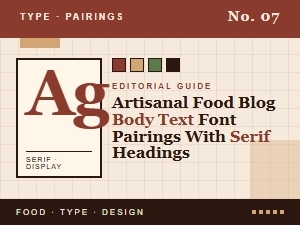 Serif Headings, Artisanal Body Text Fonts
 Best Serif and Sans Serif Font Pairings for Savory Food Blogs
 Rustic Font Pairings for Savory Recipe Sites