Getting the right organic food blog typography with rustic font combinations means balancing earthy charm with strict readability. You want your recipes to feel like they were written on a farmhouse chalkboard, but your readers still need to easily read the ingredient lists on their phones.
This design approach pairs textured, handwritten, or weathered display fonts with clean, highly legible serif or sans-serif body fonts. It works best for blogs focusing on seasonal cooking, homesteading, or local agriculture. The rustic headers set an artisanal mood, while the simple body text ensures your cooking instructions remain clear and accessible.
How to Match Fonts to Your Blog Layout
How you apply these artisanal typefaces depends on your specific blog layout and content density. If your posts feature long, detailed stories about visiting local farmers' markets, use a comfortable serif for the body text to reduce eye strain. For quick, ingredient-heavy recipe cards, a clean sans-serif keeps the measurements easy to scan.
When building your core visual identity, exploring various earthy blog design styles helps you match the font weight to your photography style. Darker, moodier food photos often pair better with lighter, delicate handwritten headers, while bright natural light photos can handle bolder, woodcut-style typefaces.
Common Mistakes and Quick CSS Fixes
A common mistake is using a distressed font for paragraph text. This destroys readability and frustrates mobile users trying to follow a recipe while cooking. Keep the rustic elements strictly to your main headings and recipe titles.
To fix cluttered headers in your CMS, increase the letter spacing on your rustic display fonts by 1px or 2px. This simple CSS tweak gives weathered letters room to breathe and prevents them from blurring together on smaller screens. If you change your focus throughout the year, look into adjusting your typefaces for different harvest seasons to keep the design fresh without losing your core branding.
Think about the visual contrast between your headers and body text. A thick, heavy font for your titles demands a very minimal, thin body font to balance the page. When planning your warmer months content, testing lighter, breezier header styles can make your fresh salad and grill recipes feel much more inviting.
Pay attention to your line height as well. Rustic fonts often have tall ascenders and deep descenders that can overlap if the lines are too close together. Setting your body text line height to at least 1.6 ensures your readers can easily track the lines while their hands are covered in flour.
Your Typography Setup Checklist
- Choose one rustic display font for main titles and recipe names only.
- Select a highly legible serif or sans-serif for ingredients and step-by-step instructions.
- Test your recipe card layout on a mobile phone in bright kitchen lighting.
- Add slight letter-spacing to your header fonts via CSS to improve clarity.
- Set your body text color to a soft charcoal (#333333) rather than harsh pure black for a more natural, organic feel.
 Farm-To-Table Fonts: a Sustainable Food Blog Guide
 Farm-To-Table Font Pairings for Seasonal Food Blogs
 Fresh Farm-to-Table Font Pairings for Summer Recipes
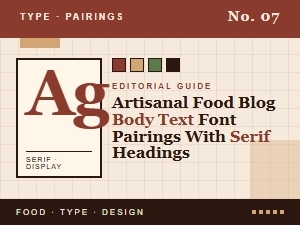 Serif Headings, Artisanal Body Text Fonts
 Best Serif and Sans Serif Font Pairings for Savory Food Blogs
 Rustic Font Pairings for Savory Recipe Sites